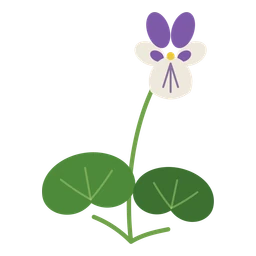
How to grow native violet in Australia
Also known as: ivy-leaf violet
Native violet is a gentle, spreading groundcover that solves one of the garden's trickier problems: what to grow in cool, damp shade. It carpets the ground with kidney-shaped leaves and dainty purple-and-white flowers almost year round, and those flowers are edible, perfect for scattering over salads and desserts. It is low, tough, self-spreading and happy where lawns and most other plants sulk.
When to plant
Native violet is hardy and forgiving, tolerating light frost, and can be planted across most of the year in mild conditions.
Temperate (Sydney, Perth, Adelaide): Excellent. Plant almost any time outside the hottest weeks, ideally spring or autumn, into a shaded, moist spot.
Subtropical (Brisbane): Grows well in shade with reliable moisture. Plant in the cooler months for easiest establishment.
Cool temperate (Melbourne): Very well suited. Plant spring or autumn and it spreads happily through shaded, damp corners.
Cold (Hobart, Canberra, alpine): Hardy in sheltered, shaded spots. Plant in spring, and it will tolerate frost once established.
Tropical (Cairns, Darwin): Workable in cool, shaded, moist positions, though it dislikes prolonged extreme heat and humidity.
Arid (Alice Springs): Difficult. Only in a heavily shaded, constantly moist, sheltered spot, as it will not tolerate dry heat.
Your planting calendar
Showing Melbourne 3000
Loading climate data…
Open the full planting calendar →How to plant
The simplest way to grow native violet is from divisions or rooted runners, which it produces freely, or from nursery punnets. Plant into moist, humus-rich soil in shade or part shade, spacing plants around 25cm apart, and they will knit together into a continuous carpet within a season.
Keep the soil moist while it establishes and mulch lightly between young plants. Once away it largely looks after itself, rooting as it runs and filling gaps on its own, so a few plants quickly become a groundcover.
Pots, raised beds, or in-ground?
It is charming in pots and hanging baskets, spilling softly over the edge with its flowers, and works well in the shaded courtyard containers where sun-lovers fail. Keep the mix moist, as pots dry faster than the ground.
In the ground it is at its best as a living carpet under trees, along shaded paths, between stepping stones or as a soft lawn substitute in low-traffic shade. It spreads by runners, so plant it where that spread is welcome, or edge it to keep it contained.
Sunlight & water
Shade to part shade is its preference. It grows most lushly in cool, dappled light and will scorch and thin out in hot full sun, so the shadier, cooler side of the garden is exactly where it belongs.
Moisture is the other half of the equation. Native violet wants consistently moist soil and resents drying out, which is why shade and moisture together are the recipe for a thriving carpet. Water through dry spells and mulch to hold dampness.
When and how to harvest
The flowers are the edible part, produced almost all year in mild climates. Pick them fresh as you need them and scatter them over salads, cakes and desserts, or crystallise them for decoration. They are mild in flavour and mostly valued for their delicate beauty.
Harvesting is as gentle as the plant. Simply pinch off open flowers, which does no harm and often encourages more. There is no season to wait for and no processing needed.
Common problems
Native violet has very few problems. Snails and slugs may graze the foliage in damp conditions, and the plant can thin out or brown off if it is allowed to dry out or is planted in too much sun, both easily fixed by adjusting position and watering. Its vigour means its main fault is spreading further than intended, which a quick edge trim controls.
It is non-toxic and safe around families and pets, and the violas it belongs to are listed as non-toxic, which makes it a reassuring choice for gardens where children and animals roam.
Companion planting
Native violet is an outstanding companion and living mulch, carpeting the soil beneath taller plants to keep roots cool and moist while suppressing weeds. It works beautifully under shrubs and small trees such as lilly pilly, around ferns, and among shade-tolerant vegetables and herbs. Give it the moist shade it likes and it will happily share space rather than compete aggressively.
Australian varieties
Native violet is sold as Viola hederacea, and the closely related Viola banksii is often offered under the same common name and grown identically, with slightly larger, more boldly marked flowers. Both spread by runners and suit the same cool, moist, shaded conditions. Choose whichever your nursery stocks, ideally a locally grown form suited to your area.
Frequently asked questions
Are native violet flowers edible?
Yes. The flowers are edible and mild, lovely scattered fresh over salads and desserts or crystallised for decoration. The plant is non-toxic and safe around children and pets.
Will native violet grow in shade?
It thrives in shade. Cool, moist, shaded ground is exactly where it does best, making it one of the most useful groundcovers for spots too dark for lawn or most other plants.
Does native violet spread?
Yes, it spreads by runners and roots as it goes, quickly forming a carpet. Plant it where that is welcome, or edge it to keep it contained. It is easy to divide and share.