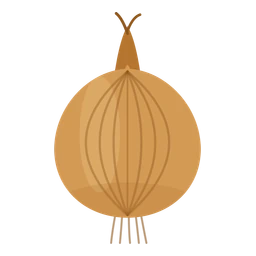
How to grow onion in Australia
Onions are simple to grow but easy to grow badly. The trick is understanding that onions are day-length sensitive, different varieties form bulbs in response to different day lengths. Plant a "long day" variety in Brisbane and you'll get tiny bulbs (or none at all). Plant a "short day" variety in Hobart and they'll bolt before bulbing. Match the variety to your latitude and the rest is straightforward: a long, slow growing season, full sun, decent soil, and patience.
When to plant
Onions need cool conditions to establish, then the appropriate day length to trigger bulb formation. Most varieties take 5–7 months from sowing to harvest. The key is choosing varieties matched to your latitude, Australian seed catalogues label them as "short day" (suits northern Australia, latitudes below 30°S), "intermediate day" (most of southern Australia, 30–40°S), and "long day" (Tasmania, alpine areas, latitudes above 40°S).
March to June. Use short-day varieties only. Long-day onions won't bulb at all in tropical latitudes. Plant during the dry season for the longest cool growing period.
March to July. Short-day varieties (Red Creole, Texas Grano, Gladalan Brown) are essential. Plant March or April for bulbs in spring or early summer.
March to July. Intermediate-day varieties work best (Pukekohe, Hunter River Brown, Sweet Red). Sydney and Perth gardeners can also use early-bulbing short-day types in early autumn plantings.
April to August. Intermediate-day varieties suit Melbourne. Plant from autumn through winter for spring-to-early-summer harvest.
May to August. Long-day varieties (Australian Brown, White Spanish, Walla Walla) are the right choice. Hobart's longer summer day length matches what these varieties need.
March to May. Intermediate-day varieties work in central Australia. Plant in late summer as the heat eases.
Your planting calendar
Showing Melbourne 3000
Loading climate data…
Open the full planting calendar →How to plant
Onions can be grown from seed, seedlings, or sets (small dried bulbs sold for replanting). Each method has tradeoffs.
Seed gives the best variety choice and the most economical large planting. Sow in trays or direct in well-prepared beds. Direct-sown seed takes longer to mature than seedlings.
Seedlings are widely available from garden centres at the right time of year. They're sold in bundles of bare-root seedlings. Plant within a day or two of buying.
Sets are small bulbs that have been pre-grown the previous year. They're fastest to harvest but limited in variety choice and prone to bolting if the season warms suddenly.
Spacing: 10cm between plants for medium-sized onions; 15cm for large bulbs; 5cm if you want spring-onion-sized green stems.
Depth: Plant seedlings or sets just deep enough to hold them upright, the top of the bulb or set should be at or just below soil level. Burying onions too deep produces small bulbs.
Soil: Well-drained, with plenty of compost worked in. Onions don't like fresh manure (causes soft growth) or acidic soil, add lime if your pH is below 6.0. Keep beds free of weeds; onions hate competition.
Pots, raised beds, or in-ground?
Onions adapt to all three options, though pots are less productive than in-ground for storage onions.
In-ground is the standard and most productive. The long growing season suits open beds, and you can grow large quantities in modest space.
Raised beds are arguably the ideal setup. The improved drainage and weed-free conditions suit onions particularly well. A 25–30cm deep bed gives plenty of room for bulb development.
Pots can produce onions but the yield per pot is modest. A 25–30cm wide pot supports 8–10 small onions. Better suited to spring-onion-style harvests than full storage bulbs. If pot space is limited, spring onions or chives are a more rewarding choice in the same container.
Sunlight & water
Full sun, 6 to 8 hours daily. Onions in shade produce small bulbs.
Water consistently through the growing season but reduce significantly as the tops start to yellow and fall over in late spring or early summer. This is when bulbs are maturing, and wet conditions at this stage cause rot and reduce storage life.
When and how to harvest
Onions are ready when the tops yellow and fall over naturally. Don't bend them down deliberately, let the plant complete this process on its own. Once most tops have fallen, the bulbs have stopped growing.
Lift the bulbs with a fork on a dry day. Brush off most of the soil but don't wash them, water on the skin reduces storage life.
Curing is essential for storage onions. Lay them in a single layer in a dry, shaded, well-ventilated spot, a covered verandah, shed, or under a shaded outdoor table, for 2–3 weeks until the necks have dried completely and the outer skins are papery. Only then cut off the tops (leaving 5cm of stem) and store in a cool, dry, dark spot. Properly cured onions keep 4–8 months depending on variety.
Common problems
Bolting, running to flower before bulbing properly, is the most common onion problem. Caused by planting at the wrong time, choosing a variety with the wrong day-length requirement for your latitude, or temperature fluctuations during establishment. Once an onion bolts, harvest it as a spring onion, the bulb won't develop further.
Thrips are tiny insects that cause silver streaks on leaves. Spray with insecticidal soap if damage is significant.
Onion fly larvae burrow into bulbs causing rot. Less common in Australian home gardens than in some climates. Crop rotation helps.
White rot, same fungal disease as garlic. Devastating once in soil. Don't plant alliums in the same bed more than once every four years.
Companion planting
Plant near: Carrots (mutual pest deterrence), beetroot, strawberries, brassicas (broccoli, cabbage, kale), tomato, capsicum.
Keep away from: Peas and beans (alliums inhibit legume nitrogen fixing), asparagus.
Australian varieties
Red Creole, Short-day red onion, suits subtropical and tropical climates. Sweet, mild flavour. Plant March–May in Brisbane.
Gladalan Brown, Short-to-intermediate day yellow-brown onion. Widely grown in Queensland and northern NSW. Good storage.
Pukekohe Longkeeper, Intermediate-day brown onion bred for southern Australian conditions. Excellent storage life (6+ months). Suits Sydney, Melbourne, Adelaide, Perth.
Hunter River Brown, Australian-developed intermediate-day variety. Reliable across most southern climates.
Sweet Red, Intermediate-day red onion with mild, sweet flavour. Less storage life than brown types, eat within 2–3 months of harvest.
Australian Brown, Long-day variety suited to Tasmania, alpine areas, and southern Victoria. Excellent storage.
Walla Walla, Sweet, mild long-day onion. Doesn't store well, eat fresh within weeks of harvest.
White Spanish, Long-day white onion, mild flavour. Suited to Tasmania.
Pet safety
Pet safety information is provided as a general guide only. If your pet has consumed any plant material, contact your vet or the Animal Poisons Helpline on 1300 869 738 immediately.